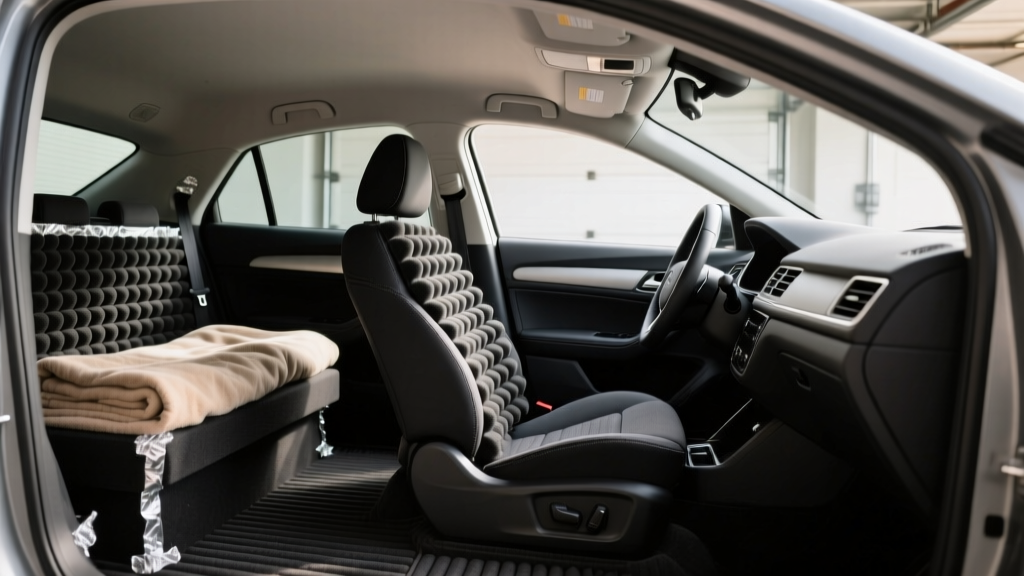
Road noise can turn even a pleasant drive into a fatiguing experience. Professional soundproofing can cost thousands, but you can achieve significant noise reduction with budget-friendly DIY methods.
## Understanding Car Noise Sources
Car noise comes from three main sources: road noise from tire contact, engine noise from mechanical vibrations, and wind noise from air turbulence around windows and mirrors.
## Materials You Will Need
Butyl rubber damping sheets for vibrations, closed-cell foam for road noise, mass-loaded vinyl or MLV for airborne noise, spray adhesive and utility knife, and a roller tool.
## Step 1: Door Panels (Highest Impact)
Remove door panels and apply butyl rubber damping sheets to the inner metal surface. Cover about 60-70 percent of the surface area. This reduces panel vibration significantly.
## Step 2: Floor Insulation
Lift the carpet and apply closed-cell foam to the floor pan. Focus on areas above the exhaust and transmission tunnel where heat and noise are most intense.
## Step 3: Firewall Treatment
Apply MLV behind the dashboard area where accessible. The firewall separates the engine bay from the cabin and is a major noise entry point.
## Step 4: Trunk and Wheel Wells
The trunk acts as a resonance chamber. Line it with damping sheets and foam. Wheel wells transmit significant road noise.
## Budget Breakdown
Butyl rubber sheets (10 sq ft): $25-40. Closed-cell foam (20 sq ft): $30-50. MLV (10 sq ft): $40-60. Total: approximately $100-150 for significant improvement.
## Expected Results
A properly executed DIY soundproofing job can reduce interior noise by 3-6 dB, which is perceptibly quieter. The biggest improvement comes from door panels and the floor.